The Linha do Douro is the classic way in: about two hours to Régua, the river beside you most of the way. This winter it does not run all the way: from 3 November 2026 to 24 March 2027, buses replace it between Marco de Canaveses and Régua.
From 3 November 2026 to 24 March 2027 there are no trains between Marco de Canaveses and Peso da Régua. Replacement buses cover that stretch, and the train runs again from Régua to Pinhão and beyond. Normal service returns on 25 March 2027.
Infraestruturas de Portugal announced the closure on 12 October 2026. It is the second of three for the line’s upgrade; the first ran from November 2025 to 2 April 2026. Hardly any English-language guide mentions it yet, and travellers on Reddit are already asking why their trip took more than three hours. Until March, a tour or a car is the faster way in.
02
Porto to Régua and Pinhão by train
The line runs 160 km from Porto to Pocinho and was built to bring the wine down to Porto. For the first hour, as far as Pala, it runs inland. From there it follows the river, and the best of it is the stretch from Régua to Pinhão and Tua.
Régua is about 1h50 from Porto São Bento, Pinhão about 2h15 and Pocinho 3h15.
A single to Pinhão costs about €12.20, to Pocinho €14.80, and a return is 10% cheaper than two singles. Children aged 4 to 12 pay half and people over 65 get 50% off with ID.
Seats are not reserved. Buy at the station or on cp.pt, and arrive early in summer: the train fills up as far as Régua.
Sit on the right going out and on the left coming back.
Trains from Pinhão are far apart. Régua has more departures, so go up to Pinhão and come back from Régua.
There is no train “every hour”, whatever you read on forums. In the normal timetable, the trains that run through to Pinhão leave Porto Campanhã at 07:30, 09:30, 13:30. This winter, with the bus between Caíde and Régua, the trip from São Bento takes about 4 hours: leave at 06:30, 09:25, 13:25 and you reach Pinhão at 11:31, 13:27, 17:16. Only four trains a day go back from Pinhão, at 07:09, 10:22, 13:57, 17:15. Times from CP’s timetables, checked on 28 October 2026; fares from Seat61, as CP only shows them in its ticket search.
03
Pinhão station, and what is a walk away
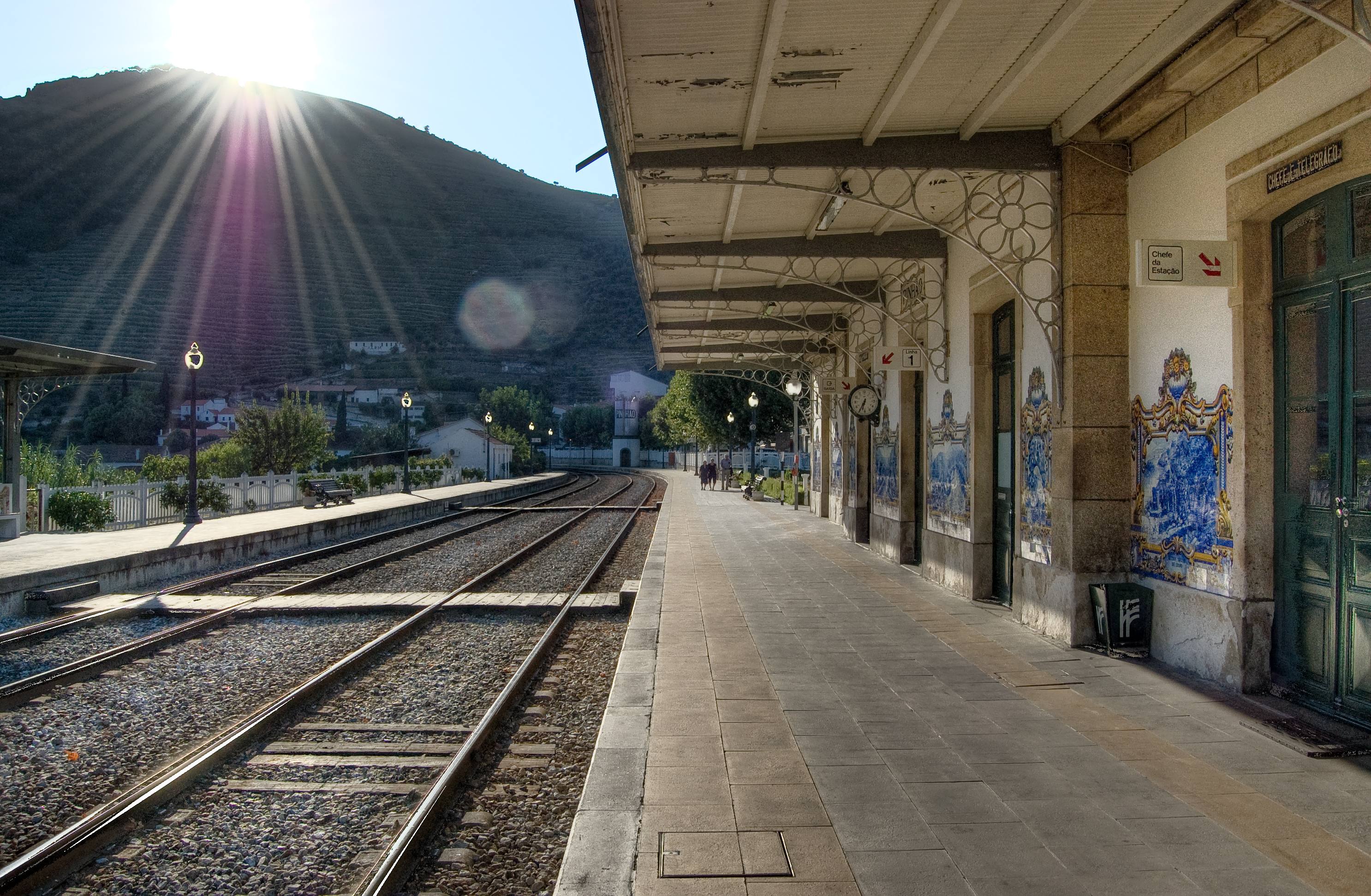
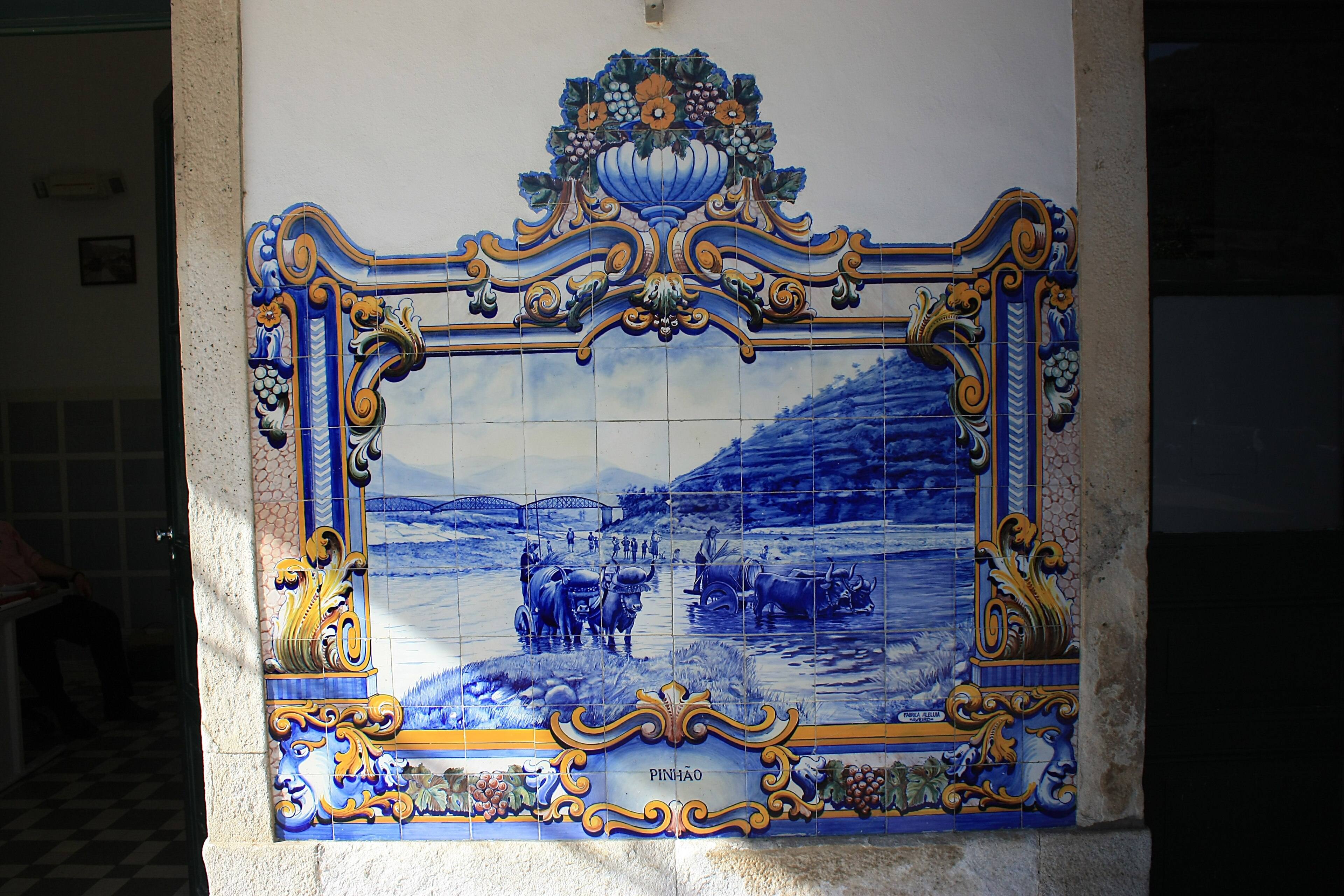
Most people get off at Pinhão, and the station is part of the visit. Its walls are covered in blue and white azulejo panels of the wine year, from the harvest to the rabelo boats that once carried the barrels down to Porto. Give them ten minutes before you set off.
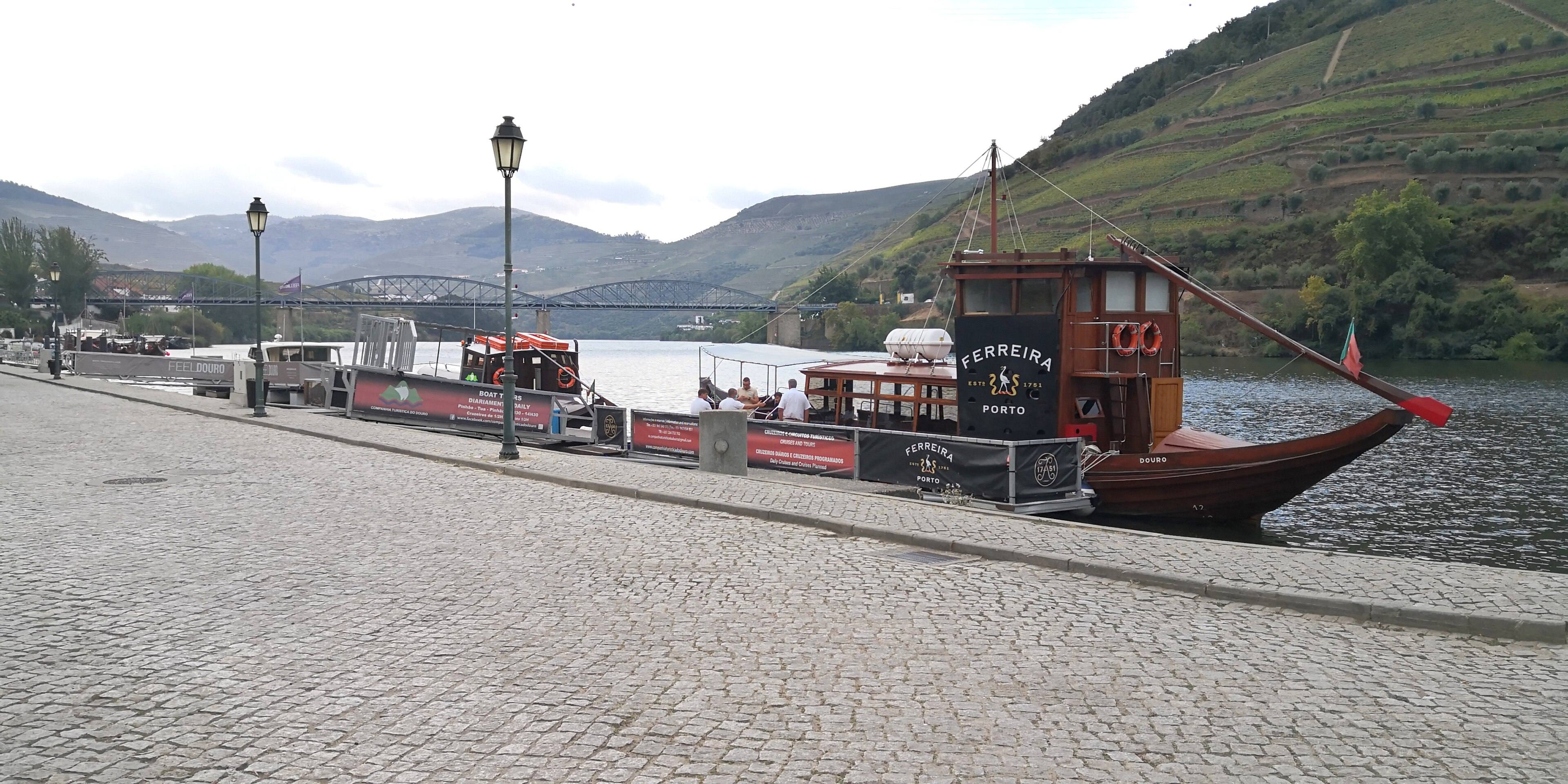
Everything else is on foot. The boats leave from the quay a few minutes below the platform. Quinta do Bomfim, Quinta de la Rosa and Quinta da Roêda are a walk away, and Quinta das Carvalhas is across the bridge. Book the quinta visits ahead in summer; the boats you can usually take on the day.
From the quay
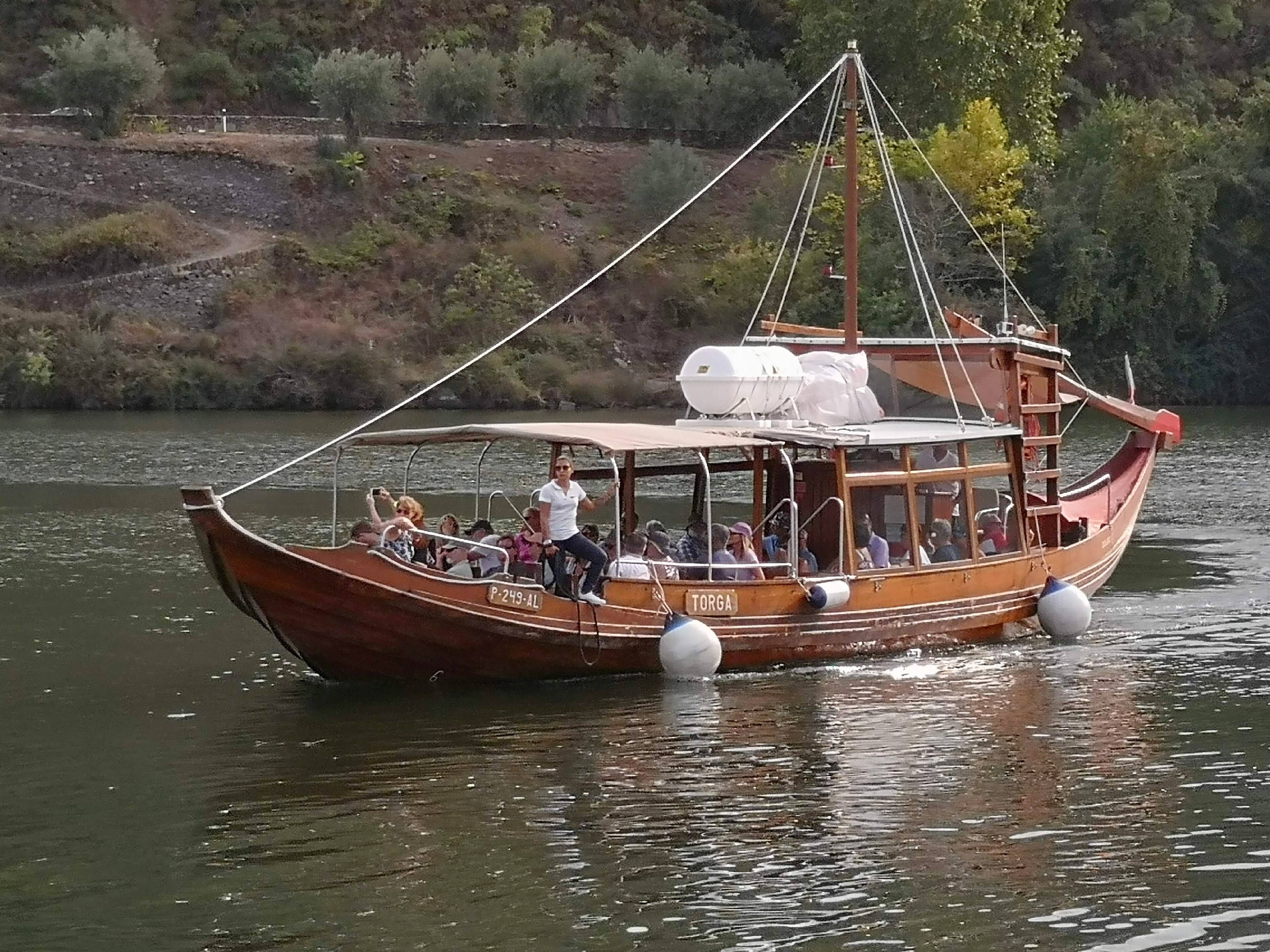
An hour on a rabelo
From €15 · 1 hour
The boats leave from the quay below the station. The classic first hour in Pinhão.
The classic day without a car, once the line reopens on 25 March 2027:
09:30: the train from Porto Campanhã, about 2h15 to Pinhão. Sit on the right.
Late morning: arrive in Pinhão, look at the azulejos and walk to a quinta for a tour and tasting.
Lunch: in the village or at the quinta. Lunch in the Douro is slow, so allow two hours.
Afternoon: an hour on a rabelo from the quay, from €15.
Late afternoon: the train back, from Pinhão or from Régua, which has more departures.
Until 24 March 2027 the same day works, but the Marco–Régua stretch is by bus each way and the day gets long. Two quintas is the realistic maximum either way.
05
The historic train is no longer steam
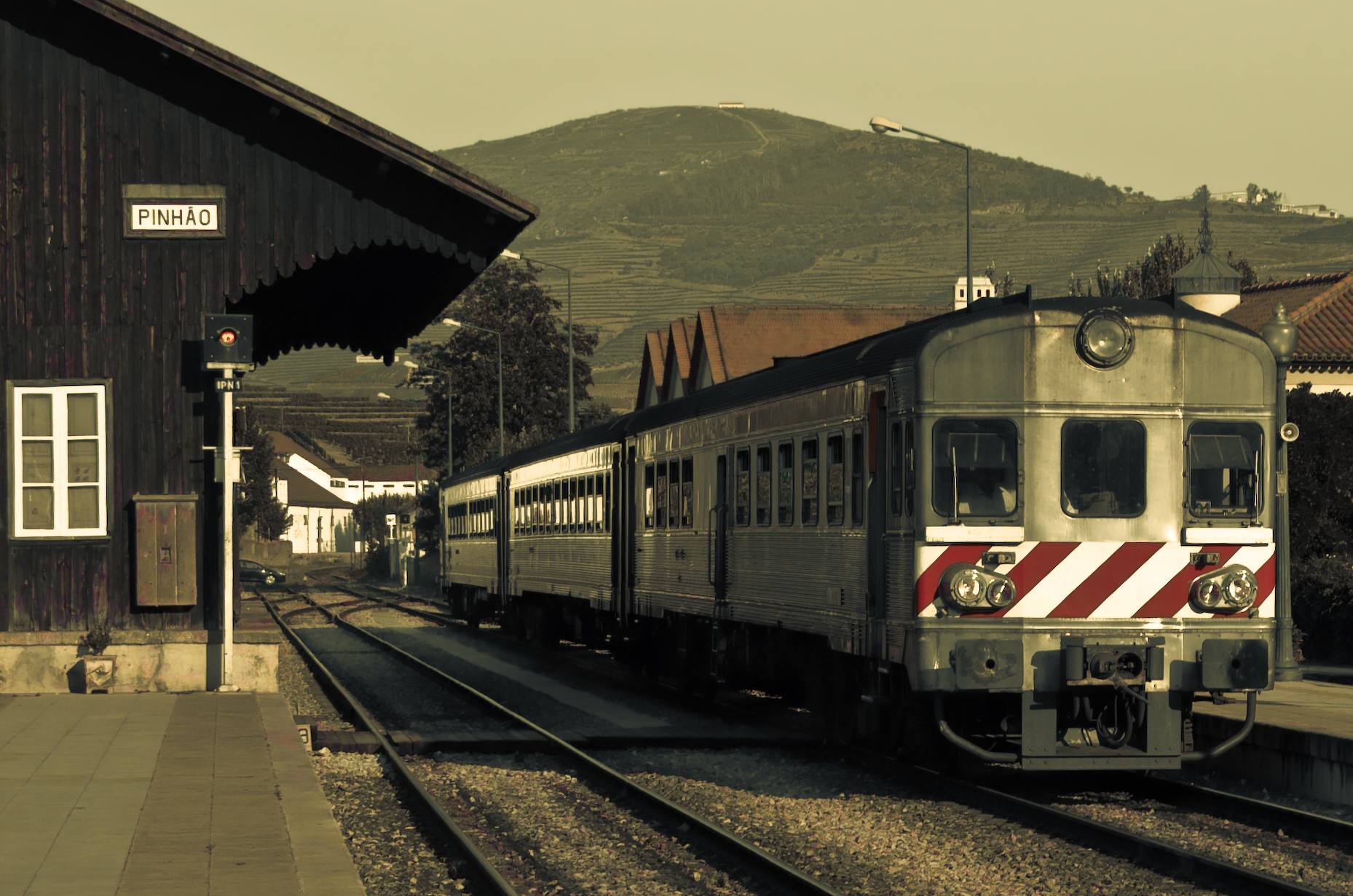
Many guides still call it the Douro steam train. Since 2025 the Comboio Histórico has been pulled by a 1960s diesel locomotive, because of restrictions on the line. The carriages are still the early-20th-century ones, and there is music and a glass of port on board.
In 2026 it ran from 6 June to 18 October 2026 at weekends and on some Wednesdays: Régua to Tua and back, about 3 hours; it leaves Régua at 15:00, back at 18:22. Tickets were €60 per adult and €32 per child aged 4 to 12. The 2027 dates are not out yet. Some tours from Porto include it, with the transfer to Régua.
06
Stay a night by the line
One night changes a train trip: you get the valley early and late, and you are not watching the clock for the last train. These three are a walk from a station.
Pinhão · on the quay
The Vintage House
From ≈ US$270 a night
A room over the river, a few minutes on foot from the platform.
By car, take the A4 east and the A24 south to Peso da Régua: about 1 hour 15 minutes. From Régua, the N222 follows the south bank to Pinhão, 27 km with 93 bends. In 2015 a study for Avis named it the best road in the world to drive. Treat that as the marketing it was, but the road is beautiful.
The roads are slow, and the climbs to some quintas are narrow and one-way. The most common mistake is to book a quinta far up a side valley for the view and spend the day driving. The person driving should not taste: the limit in Portugal is 0.5 g/l, and 0.2 g/l for drivers with a licence under three years old.
08
Once you are there, without a car
Uber and Bolt drivers in the valley often cancel. The quintas will call a taxi for you; book it the day before in summer, because the few taxis in Pinhão go early. Peso da Régua is compact, and the Museu do Douro (€7) is a short walk from the station. In Pinhão, three quintas and the boats are a walk from the platform.
How do I get from Porto to the Douro Valley by train?
Take the Linha do Douro from Porto São Bento or Campanhã to Peso da Régua (about 1h50) or Pinhão (about 2h15). Buy the ticket at the station or on cp.pt. From 3 November 2026 to 24 March 2027, buses replace the trains between Marco de Canaveses and Régua.
Is the train to the Douro still running this winter?
Yes, but not all the way. From 3 November 2026 to 24 March 2027 there are no trains between Marco de Canaveses and Peso da Régua, and replacement buses cover that stretch. Trains run normally again from 25 March 2027. Source: Infraestruturas de Portugal, October 2026.
What is there to do at Pinhão train station?
Look at the azulejo panels on the station walls, then walk: the boats leave from the quay just below, and Quinta do Bomfim, Quinta de la Rosa and Quinta da Roêda are a walk from the platform.
Which side of the train should I sit on?
On the right going out from Porto, on the left coming back. For the first hour the line runs inland; it meets the river around Pala and stays beside it to Pinhão.
Is the Douro historic train a steam train?
Not any more. Since 2025 the Comboio Histórico has been pulled by a 1960s diesel locomotive. In 2026 it ran from 6 June to 18 October 2026, Régua to Tua and back, about 3 hours, for €60 per adult.
Can I do Porto to the Douro and back in one day by train?
Yes. Take a morning train to Pinhão, visit a quinta or take a boat, and come back in the afternoon. Trains are far apart, so check the return times before you leave, and consider coming back from Régua, which has more departures.
How far is the Douro Valley from Porto?
Peso da Régua, where the wine valley begins, is about 1 hour 15 minutes east of Porto by car, or about 2 hours by train. Pinhão is 27 km further up the river on the N222.