Choose the base before the hotel
Most regrets about a night in the Douro come from the base, not the room: a beautiful quinta and no car, or a cheap room in Régua and a long drive to everything. Decide first how you will move around. Without a car you want to be within walking distance of a station, the boats and a few quintas. With a car you can stay anywhere, but every dinner off the property means someone does not drink.
Then decide whether the place itself is the point. On a quinta the vineyard outside the window, the tasting before dinner and the silence are the reason to stay. In a village you trade that for restaurants, the river and the train on your doorstep.
Pinhão: the village to stay in without a car
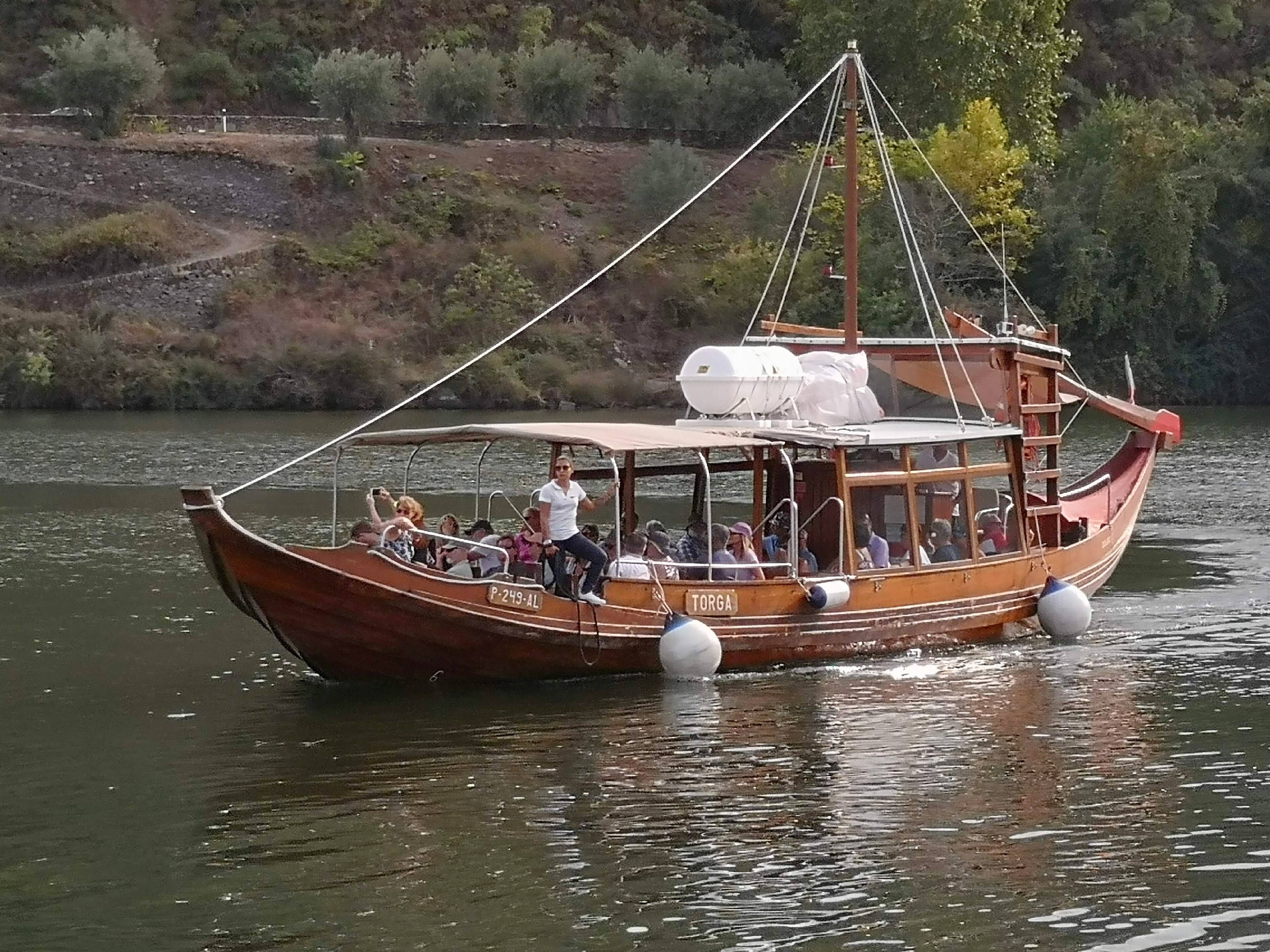
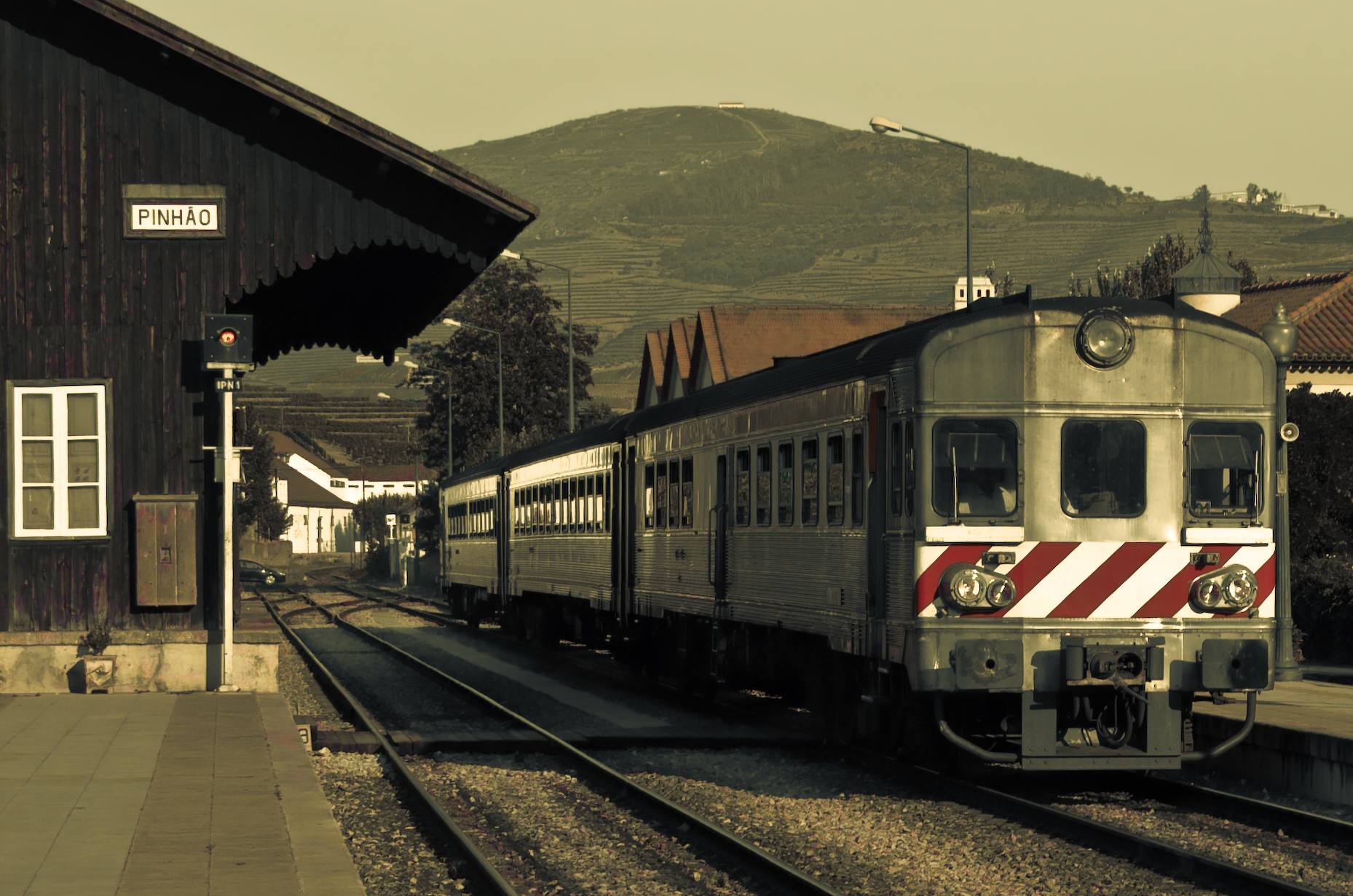
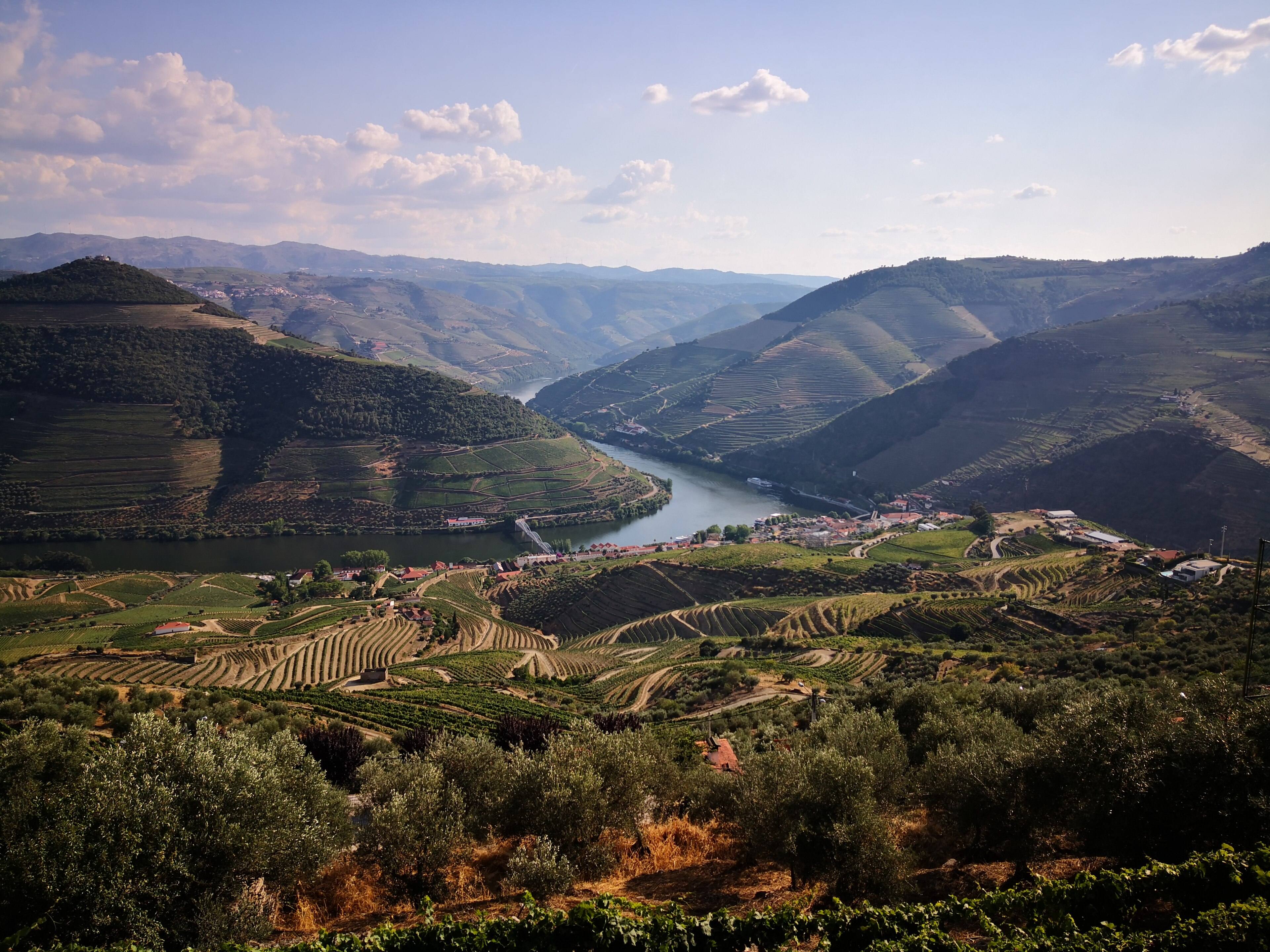
Pinhão sits on a bend of the river in the Cima Corgo, the heart of the wine region. From the station you can walk to Quinta do Bomfim, Quinta de la Rosa and Quinta da Roêda, and cross the bridge to Quinta das Carvalhas. The rabelo boats leave from the quay: an hour on the river costs €15. The train from Porto takes about 2h15.
The catch is size. There are only a handful of restaurants, the few taxis go early in summer, and trains are far apart. Book dinner when you book the room.
Régua and Lamego: trains, budgets and a town
Peso da Régua has the most trains and boats in the valley, riverside restaurants and the cheapest hotels. It is a practical base for an early train or a boat trip, but it is a working town with little to see, and travellers who stayed there often say they wished they had chosen Pinhão.
Lamego, about fifteen minutes up into the hills, is the better town: a historic centre, more places to eat, and the baroque stairway of 686 steps to the sanctuary of Nossa Senhora dos Remédios. It suits travellers with a car who want more than wine. You will drive to the river every day.
A quinta in the vineyards
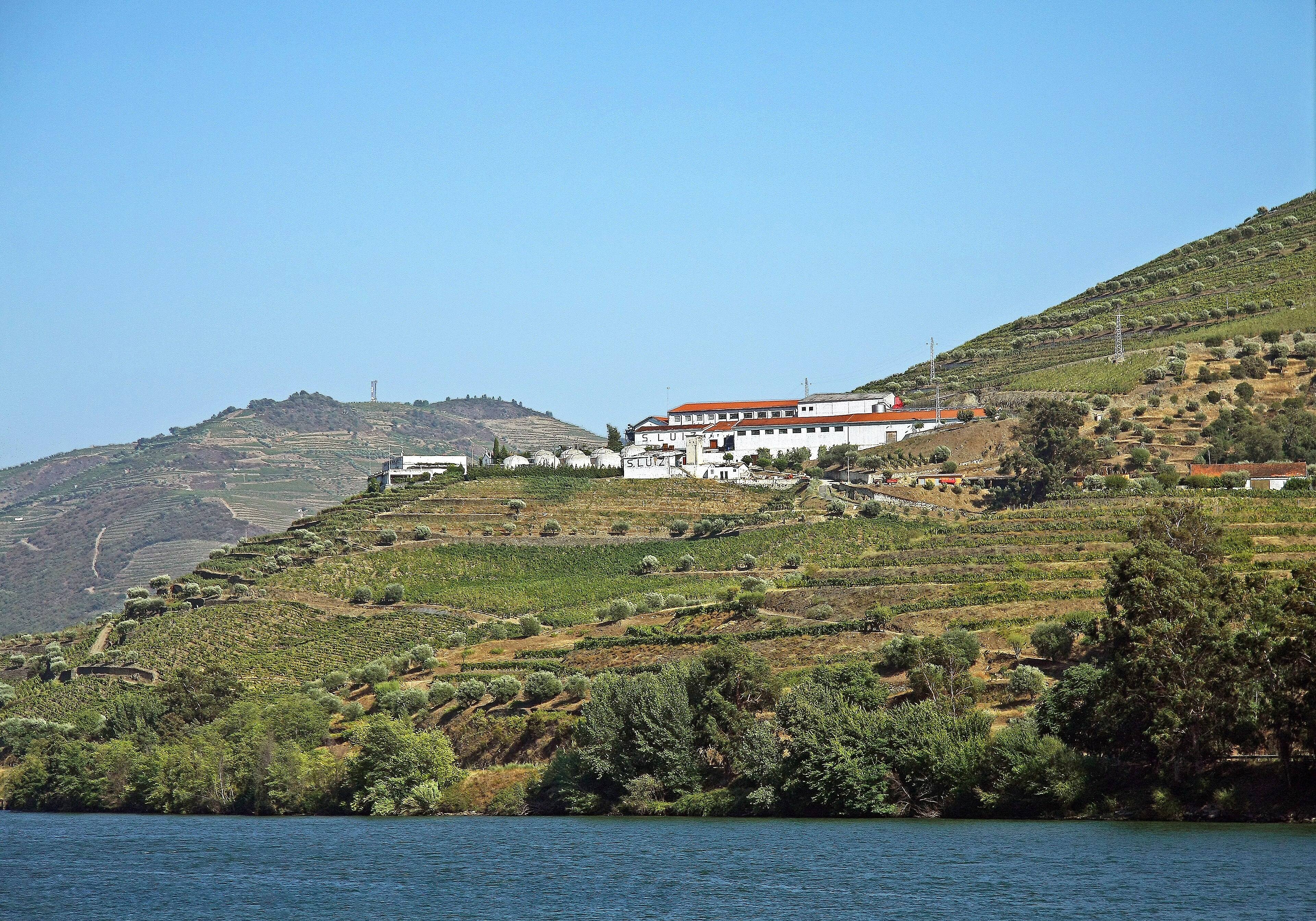
Staying on a quinta is the reason most people stay over at all: you wake up among the terraces, taste without driving and have dinner at the house. The best-known ones range from Quinta de la Rosa, a walk from Pinhão station, to Relais & Châteaux comfort at Quinta Nova and the barrel suites at Quinta da Pacheca.
The trade-off is isolation. Most quintas are up on the slopes, on narrow roads, some one-way. Two nights work better than one, and a car, or a taxi booked through the quinta, is part of the plan.
Staying without a car
Stay within walking distance of the station in Pinhão or Régua. For anything further, ask the hotel or the quinta to call a taxi, and book it the day before in summer: ride-hailing drivers in the valley often cancel. Travellers in 2026 reported around €20–30 each way between Régua and Pinhão by taxi.
Your questions, answered
Where is the best place to stay in the Douro Valley?
Pinhão if you do not have a car: quintas, boats and the train are all within walking distance. A quinta on the slopes if you have a car and two nights. Peso da Régua if you arrive by train on a budget. Lamego if you want a town with more to do than wine.
Should I stay in Pinhão or Régua?
Pinhão, for most people. It is smaller and prettier, and three quintas are a walk from the station. Régua has more trains, boats and cheap hotels, but little to see.
How much is the Six Senses Douro Valley?
From about US$1,080 to US$1,670 a night in the dates we checked in 2026. It is the most expensive stay in the valley.
Are the hotels ranked by price?
No. They are grouped by base and style. Prices are the lowest nightly rates we saw on booking sites in 2026 and change a lot with the date.
How many nights should I stay in the Douro?
One night already changes the trip, because you get the valley early and late without the drive from Porto. Two nights let you add a third quinta, a viewpoint and a slow lunch.